Your wine style? How to manage your way through a wine dinner, party or at a restaurant?What are you supposed to do, and more important, what are you not supposed to do at a wine dinner? Taking cues from different connoisseurs, authors, wine festivals and experiences from different hosted wine parties and wine dinners across the world, here are the simple steps for personal awareness and appreciation at a wine dinner or at a restaurant: - Scan the menu or list of available wine bottles. Read the labels, locale and specialties.
- Confidently hold the glass by the bottom rim or the stem. Hold all wine glasses this way (unless you are going for specialties or even a cognac :)
- Ask the server for the wine of your choice with an assertive approach. You can point to the wine label/ bottle and say "I would like to the taste this wine". This method will allow you to escape the unpronounceable names, which frequently appear.
- Slowly begin to rotate your wrist in a circular motion while holding the glass by the bottom rim. The wine will immediately begin to move around the sides of the glass.
- With your nose firmly planted in the glass, begin to inhale slowly and deliberately. Remove your nose - dive in again. Do this two - three times.
- Tasting the wine - Bring air into your mouth by sucking in, while the wine is in your mouth. This will cause the wine to tumble and fall all round your mouth. Take another sip for confirmation of your selection or order.
Wine tasting (often, in wine circles, simply tasting) is the sensory examination and evaluation of wine. While the practice of wine tasting is as ancient as its production, a more formalized methodology has slowly become established from the 14th century onwards. Modern, professional wine tasters (such as sommeliers(wine steward) or buyers or retailers) use a constantly-evolving formal terminology which is used to describe the range of perceived flavors, aromas and general characteristics of a wine. More informal, recreational tasting may use similar terminology, usually involving a much less analytical process for a more general, personal appreciation.
Wine Tasting stages (For Evaluating wines you buy):The results of the four recognized stages to wine tasting: - appearance
- "in glass" the aroma of the wine
- "in mouth" sensations
- "finish" (aftertaste)
– are combined in order to establish the following properties of a wine: - complexity and character
- potential (suitability for aging or drinking)
- possible faults
A wine's overall quality assessment, based on this examination, follows further careful description and comparison with recognized standards, both with respect to other wines in its price range and according to known factors pertaining to the region or vintage; if it is typical of the region or diverges in style; if it uses certain wine-making techniques, such as barrelfermentation or malolactic fermentation, or any other remarkable or unusual characteristics. Whereas wines are regularly tasted in isolation, a wine's quality assessment is more objective when performed alongside several other wines, in what are known as tasting "flights". Wines may be deliberately selected for their vintage ("horizontal" tasting) or proceed from a single winery ("vertical" tasting), to better compare vineyard and vintages, respectively. Alternatively, in order to promote an unbiased analysis, bottles and even glasses may be disguised in a "blind" tasting, to rule out any prejudicial awareness of either vintage or winery.
Learning how to taste wines is a straightforward adventure that will deepen your appreciation for both wines and winemakers. Look, smell, taste - starting with your basic senses and expanding from there you will learn how to taste wines like the pros in no time! Keep in mind that you can smell thousands of unique scents, but your taste perception is limited to salty, sweet, sour and bitter. It is the combination of smell and taste that allows you to discern flavor. - Look: Check out the Color and Clarity: Pour a glass of wine into a suitable wine glass. Then take a good look at the wine. Tilt the glass away from you and check out the color of the wine from the rim edges to the middle of the glass (it's helpful to have a white background - either paper, napkin or a white tablecloth).What color is it? Look beyond red, white or blush. If it's a red wine is the color maroon, purple, ruby, garnet, red, brick or even brownish? If it's a white wine is it clear, pale yellow, straw-like, light green, golden, amber or brown in appearance?
- Still Looking. Move on to the wine's opacity. Is the wine watery or dark, translucent or opaque, dull or brilliant, cloudy or clear? Can you see sediment? Tilt your glass a bit, give it a little swirl - look again, is there sediment, bits of cork or any other floaters? An older red wine will often have more orange tinges on the edges of color than younger red wines. Older white wines are darker, than younger white wines when comparing the same varietal at different ages.
- Smell:Our sense of smell is critical in properly analyzing a glass of wine. To get a good impression of your wine's aroma, swirl your glass for a solid 10-12 seconds (this helps vaporize some of the wine's alcohol and release more of its natural aromas) and then take a quick whiff to gain a first impression.
- Still Smelling: Now stick your nose down into the glass and take a deep inhale through your nose. What are your second impressions? Do you smell oak, berry, flowers, vanilla or citrus? A wine's aroma is an excellent indicator of its quality and unique characteristics. Swirl the wine and let the aromas mix and mingle, and sniff again.
- Taste:Finally, take a taste. Start with a small sip and let it roll around your mouth. There are three stages of taste: the Attack phase, the Evolution phase and the Finish.
- The Attack Phase, is the initial impression that the wine makes on your palate. The Attack is comprised of four pieces of the wine puzzle: alcohol content, tannin levels,acidity and residual sugar. These four puzzle pieces display initial sensations on the palate. Ideally these components will be well-balanced one piece will not be more prominent than the others. These four pieces do not display a specific flavor per se, they meld together to offer impressions in intensity and complexity, soft or firm, light or heavy, crisp or creamy, sweet or dry, but not necessarily true flavors like fruit or spice.
- The Evolution Phase is next, also called the mid-palate or middle range phase, this is the wine’s actual taste on the palate. In this phase you are looking to discern the flavor profile of the wine. If it’s a red wine you may start noting fruit – berry, plum, prune or fig; perhaps some spice – pepper, clove, cinnamon, or maybe a woody flavor like oak, cedar, or a detectable smokiness. If you are in the Evolution Phase of a white wine you may taste apple, pear, tropical or citrus fruits, or the taste may be more floral in nature or consist of honey, butter, herbs or a bit of earthiness.
- The Finish is appropriately labeled as the final phase. The wine's finish is how long the flavor impression lasts after it is swallowed. This is where the wine culminates, where the aftertaste comes into play. Did it last several seconds? Was it light-bodied (like the weight of water), medium-bodied (similar in weight to milk) or full-bodied (like the consistency of cream)? Can you taste the remnant of the wine on the back of your mouth and throat? Do you want another sYou can use it too!ip or was the wine too bitter at the end? What was your last flavor impression – fruit, butter, oak? Does the taste persist or is it short-lived?
After you have taken the time to taste your wine, you might record some of your impressions. Did you like the wine overall? Was it sweet, sour or bitter? How was the wine's acidity? Was it well balanced? Does it taste better with cheese, bread or a heavy meal? Will you buy it again? If so, jot the wine's name, producer and vintage year down for future reference.
Credits to different websites and experienced connosieurs who guided me, these simple techniques helps me for hosting wine parties as well as selectign and evaluating personal wine choices.
How do you know when a wine has gone off - at home or in a restuarant?
The most common problem is a "corked wine". This results in a musty, mildew smell. It often also occurs with poorly made corks. Oxidisation is another common fault.
The term "corked" is used to describe a bottle of unopened wine that has gone bad. Please note that, every so often you are going to get a bottle of wine that is spoiled, also depending on the area where people have varied knowhow of wine keeping. This is mainly caused by a bad cork. The cork is bad from the start and will “turn” the wine.
In some instances the winery may be responsible for tainted wine. The combination of certain chemicals used in a winery may combine with bacteria to produce an off odor in the wine.
You can also spoil an unopened bottle of wine by aging and storing the wine improperly. A high temperature is usually the culprit in this case.
Once you open a bottle of traditional corked wine, it will only last a couple of days even under the best of conditions.See my previous posts on how to store it.
- First smell the wine when you open it. You can smell it right from the bottle or from the glass.
- If is wine is corked, it will smell exactly like wet cardboard. The smell can range from faint to strong.
- The color of the wine in the glass may also tip you off. White wines can get a dark or off color of yellow; reds can have a brownish tinge.
- Put the cork back on the bottle and if convenient return it to where you purchased it.
- If you are at a restaurant and the wine is corked, you will need to tell the waiter immediately. If you're not sure, ask the waiter to smell it or take a taste.
What does keeping and serving the wine in "Room temperature' mean? especially In India?
Red wines should be served cool (18 degree centigrade). In India, with our tropical room temperature, which is around 30 degree centigrade is not suitable.- To get the red wine down to this temperature, simply put it in the lower part of the fridge for an hour; or if you have left it there overnight, take the bottle out and stand it for an hour before serving.
White wine and sparkling wine should be served cold but not chilled to the bone, a few degrees away from freezing, and kept chilled in an ice bucket.
If you have to chill Champagne or white wine really quickly (i.e you have forgotten to do it earlier), prepare a large bucket with tons of ice and cold water and dunk it in there for 20-30 minutes.
Should I finish the whole bottle once it is opened?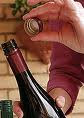 The latest world wide trend, is screw caps on wine bottles.(Please note that earlier, screw caps were associated with cheap wines, which is not the case now. Change in perception is occuring based on scientific research)  Studies have indicated that there is much less spoilage with screw caps than traditional corks. Once you oprn a screw capped wine bottle, you can empty left over wine into a well washed small glass bottle with a tight screw cap leaving no gap for any air. The wine generally last a week or so like this in a fridge.
With a traditional cork bottle, you will have to consume the wine very quickly after opening. Glass cork fillers are available, but in my usage and experience, not so effective to keep in room temparature.
How should I store a bottle of wine?Store in a cool, dark place (like the bottom of a cupboard) wrapped in newspaper to keep the temperature constant, without moving them around too much. If they have corks, lie them down horizontally.
What kind of glasses should I serve different wines in?- Bigger glasses for reds.
- Tulips(standard wine glasses) for whites.
- Champagnes can be served in flutes (tall, long, thin wine glasses) so that the bubbles dont escape or in tulips.
How should one hold the wine glass?Traditionally, always from the base or teh stem so that the warmth of your hand doesnot affect the temperature of the wine.
These days, who would need a special occasion to savour champagne / wine? Introduction - Why you need to read this?Earlier people used to prefer it with cheese, right kind of food and for special occasions! It is gaining popularity now and essential etiquette training for developing world like using spoon and fork - if you are not already familiarised and initiated into appreciating wine by a knowledgeable counterpart or a well travelled friend/family member.Read on to know more and equip yourself - compiled from my own experiences, readings from several wine connoisseurs and books, several wineyard visits and guidance from knowledgable friends across the world. Also have some recommendations for you to try your hands on and to develop your own opinions! Background and emerging cultureTraditionally in western world, connoisseurs, 'culteratti', party goers, celebrations and romantic lovers are said to thrive on Champagne and caviar. France, Italy, Germany,Austria, Swiss, California .... have specific regions where aroma and the taste of the land gives recognisable distinction.Now emerging developing worlds like China and India also have a growing community of wine connosseurs and focus on distinct wine areas. ChampagneChampagne is the sparkling wine made only in the Champagne district of France from the three locally produced grapes(Chardonnay, Pinot Noir and Pinot Meunier) by the traditional 'in bottle' method of secondary fermentation and has been the 'food of love' for at least the past 200 plus years. 'Champers' used to be sweet and qualified from a wide-brimmed wine cup; preferences now a days are for a drier style('Brut'), drunk from fluted glasses (so that the bubbles can be seen and the aroma appreciated). Moet & Chandon Brut Imperial may be the champagne with the highest sales worldwide (Indian retail price approx. Rs.4000/-), but vintage Champagne like Krug or Dom PErignon go for upwards of Rs.15000/- and the most expensive variants touch the stars. Sparkling wines Sparkling wines are made all over the world. Most countries have just plain 'Methode Champenoise' or 'Methode Traditionalle' - mostly good stuff, generally sold at lower prices! (Once imported in India, this too gets expensive for common man and middle class romantics!) Indian sparkling wines have been around for 25 years plus: from the pioneer Indage's Marquise de Pompadour' to teh Sula Brut, and now Zampa Soiree(formerly 'Zampagne', till the Champagne lawyers took the company to court). Cava (Spain)Cava brands Codorniu and Freixenet are selectively availale in hotels and supermarkets (depends on the listing by beverage corporations / interested importers with license) Sekt (Germany)Sekt labels Henkell Trocken(dry) and Deinhard is available on retail shelves in metro cities like Bangalore, Pune, Mumbai, Delhi etc. Porsecco and Spumante (Italy)Martini & Rossi is an Italian multinational alcoholic beverage company primarily associated with the Martini brand of vermouth and also with sparkling wine (for example, Asti Spumante). It also produces the French vermouth, Noilly Prat. White wine
First things first, why is "white" wine, not white at all, but yellow, golden or straw-like in color? Its color can be derived from an assortment of grape varietals. White wines are made from the grape juice and grape skin of green, gold or yellowish colored grapes or from just the juice (not the skin) of select red grapes (as in some Champagnes).
Types of White WineA quick reference to the major types of white wine varietals. - Albarino
- Chardonnay :- Flavor Profile: Chardonnays boast an impressive range of flavors from the expected buttered, oak overtones to the fresh, fruit flavors of apple, pear, tropical, citrus and melon, leaving a lasting palate impression. Food Pairing: Chardonnay will pair well with poultry dishes, pork, seafood or recipes that have a heavy cream or butter base. Also consider pairing unoaked Chardonnay with guacamole, garlic, salads, grilled shrimp or even curry dishes.
With a long and distinguished following, Chardonnay enjoys a very versatile image, with vintners offering a broad range of styles and structures. From rich, buttery Chardonnays that boast power and presence to the unoaked fruit-forward Chardonnays that allow the varietal character and expression to be in the spotlight, this white wine is capable of accomodating most palates and just as many food pairing combinations.
- Chenin Blanc
- Gewurztraminer
- Gruner Veltliner
- Kerner
- Müller-Thurgau
- Pinot Blanc
- Pinot Gris/Pinot Grigio
- Riesling: Riesling wines originated in Germany's Rhein and Mosel river valleys, it was here that this white grape gained its tenacious foothold in today's modern white wine market. A Riesling wine can span a broad range of styles, being produced in both dry to sweet variations as well as light to full-bodied.
- Sauvignon Blanc
Recommendations: 1. Pickup from Germany: Beeren Auslese Rheinhessen (little sweetish it is made from selected grapes coming from Germany's Rheinhessen region.) Red WineWhy are red wines "red," why do bigger glasses work better for serving red wines and what is the difference between a light-bodied red wine and a full-bodied red wine?
Types of Red WinesSome of the most common red wines that you are likely to encounter are: Cabernet Sauvignon, Pinot Noir, Merlot, Zinfandel, Cabernet Franc, Chianti, Barolo, Barberesco, Petite Sirah, Syrah, Shiraz, Sangiovese, Malbec, Tempranillo, Grenache, Bordeaux, and Côtes du Rhône. - Beaujolais Nouveau
- Cabernet Franc
- Cabernet Sauvignon
- Chianti
- Lagrein
- Malbec
- Merlot
- Nebbiolo
- Pinot Noir
- Red Wine Sangria Recipes
- Sangiovese
- Tempranillo
- Zinfandel
See more on a separate article in http://family.sneham.in
White Wine Guide Descriptions, Food Pairing, History Rose WineRose wines are not made from roses but from red grapes, with the period of skin contact being restricted, and the wines produced in a lighter, sweeter, and low alcohol style (than red wines).Because of this, Rose wines are teh colour of love(light pink to deep salmon), and tend to be aromatic, light, not-dry wines that can be had either by themselves as an apertif or matched with a variety of Indian and Oriental dishes. However you would see that most newly initiated Indian consumers play safe when choosing wines and hence ignores Rose wine. Some of the recommendations are: - Sula Blush Zinfandel (approx Rs. 600/- in Bangalore)
- Grover Shiraz Rose (approx Rs.500)
- York Winery's Zinfandel Rose (Rs. 500)
Wine Rating Scales- Oechsle in Germany
- Klosterneuburger Mostwaage (KMW) in Austria
- Baumé scale (occasionaly used in France and US wines)
German wine industry and Classification system 'Prädikat'Today any consumer of German wine is familiar with the Prädikat, a classification system which describes, albeit imperfectly, the style of wine in the bottle. From a single plot of land we might expect a myriad of styles, ranging from dry to sweet, perhaps bone dry, perhaps botrytised; all very different, although all labelled remarkably similarly, save for the Prädikat. Two centuries ago, however, the wines would have been more extensively blended, more completely fermented, and thus more full bodied and richer in alcohol, although probably not in residual sugar. These were very different wines, still potentially very respectful of the terroir(obviously depending on how they were blended), but importantly creating a more readily identifiable house style than the wines of today. Most wines exported from Germany will be of Qualitätswein mit Prädikat (QmP) quality, which from the 2007 vintage has been shortened to Prädikatswein, and this is the top classification level. There are lower categories, including Tafelwein (equivalent to Frenchvin de table), and one step up is Landwein (perhaps equivalent to French vin de pays). In general there are no wines of interest in these categories.The next step up are theQualitätswein bestimmter Anbaugebiete (QbA) wines. A key difference between the QbA and QmP categories is that the former may be Chaptalised, whereas the latter may not legally be manipulated in this way. All may be subject to the addition of süssreserve, however, akin to the dosage in Champagne, so there is always an opportunity for blatant manipulation at some point! It is the QmP wines that, as the name suggests, bear one of the Prädikat categories on the label. The Prädikat describes the character of the wine in the bottle but, as I stated earlier, it does this in an imperfect way. This is because the Prädikat is determined not by any characteristic of the finished wine, but rather by the concentration of sugars (must weight) in the must (grape juice) that was fermented in order to make the wine. It stands to reason that a must rich in sugar will produce a sweet wine, as not all of that sugar will be converted to alcohol by the fermentation process. For lesser must weights, however, the fermentation will have a more significant impact on the style of the final wine. There are no limits on levels of alcohol or residual sugar in the final wine, so two wines with the same concentration of sugar prior to fermentation may taste quite different afterwards, depending on how much of the sugar has been converted to alcohol. A full fermentation may produce a dry wine, richer in alcohol, whereas a more traditional approach may yield a wine with less alcohol but more residual sugar, producing a sweeter style. Vintages also have a significant effect, as in a very warm year such as 2003 and perhaps even 2005, the grapes are harvested in a healthy, ripe condition and the must weight will be higher than in lesser vintages. As a result, those wines labelled as Kabinett may be made from juice with a must weight far in excess of that legally required for this category, and thus the wine will taste unusually rich for a Kabinett. It may even meet the legal criteria for a Spätlese, but be bottled and labelled as a Kabinett, perhaps because the wine does not meet the standards the winemaker wishes of his Spätlesen, or because this is the only way to ensure the estate's portfolio still includes a Kabinett for those that wish to buy at this level. So there are problems, but the system is ubiquitous, and even crops up in Austria although many wines there simply declare themselves to be Qualitätswein, and can be assumed to be dry. In Germany here are six Prädikat levels in usage; the first three are made from grapes with a progressively higher must weight, and range from off-dry to very sweet. The next three levels are always intensely sweet, and are produced using methods described in my guide to sweet wines. It is not necessary to remember any of the details regarding required must weight for the six levels of the Prädikat (although I have presented them below), merely the order in which they sit, and also to appreciate that the values for different regions overlap - so that before fermentation a Mosel Auslese, to give just one example, might have had the same must weight as a Pfalz Spätlese. Broadly speaking (very broadly), requirements are more stringent the further south the vineyard, so that the Rheingau, Pfalz and Rheinhessen classifications demand a higher must weight than the Nahe, which must in turn be higher than the Mosel (including the Saar and Ruwer). As a starting point, wines classified as QbA must reach 51 Oechsle for the Mosel (which from 2007 is the catch-all term to describe what was previously known as Mosel-Saar-Ruwer) and Mittelrhein, 57 Oechsle for the Nahe and Rheingau and 60 Oechsle for thePfalz and Rheinhessen. The Prädikatsweins, are as follows from the winedoctor's regionalguides gives: - Kabinett: In theory this is the lightest prädikatswein. As indicated above, however, in ripe years this category may well be produced from grapes that are easily of Spätlese quality. The minimum required Oechsle values are 70 for the Mosel, Mittelrhein and Nahe and 73 for the Pfalz, Rheingau and Rheinhessen.
- Spätlese: This translates literally as 'late harvest', the extra time spent on the vine being the reason for higher sugar concentrations prior to fermentation. The minimum required Oechsle values are 76 for the Mosel and Mittelrhein, 78 for the Nahe and 85 for the Pfalz, Rheingau and Rheinhessen.
- Auslese: This means 'selective harvest', and these wines are made from selected bunches, taken late in the harvest, that have higher sugar concentrations than spätlese. The principle of harvest later to produce a richer style of wine, possibly even a very sweet wine, is described in my article on the late harvest style. The minimum required Oechsle values are 83 for the Mosel and Mittelrhein, 85 for the Nahe, 92 for the Pfalz and Rheinhessen and 95 for the Rheingau.
- Beerenauslese: The term beerenauslese translates as 'selected grapes', and refers to wines produced from grapes individually selected for the purpose. The grapes are generally dehydrated by botrytis, the basis for the world's greatest sweet wines, including Sauternes and Tokay. The minimum required Oechsle values are 110 for the Mosel and Mittelrhein, 120 for the Nahe, Pfalz and Rheinhessen and 125 for the Rheingau.
- Trockenbeerenauslese: The term trockenbeerenauslese means 'dry berry selection', and refers to the individual grapes which have been shrivelled to a dry state by botrytis, and consequently selected for this wine. The minimum required Oechsle values is a heady 150 regardless of the origin of the wine.
- Eiswein: Meaning literally 'ice wine', these wines are made from grapes which have been left on the vine well into winter, and have been frozen prior to picking. The principles involved in the production of these wines, common in Germany and increasingly so in Canada, are explained in my eiswein article. Here it is the method of production that is more important than the Oechsle rating value.
So, start with the recommendations for various occasions - casual, party or food pairing. Happy and responsible drinking, even checking for the risk of calories, age impact and health benefits! :)
|
|


Search sneham.in